LESS VISIBLE HARDWARE
Heating functionality can be integrated into panels, furniture and objects instead of added as a separate visible heater.
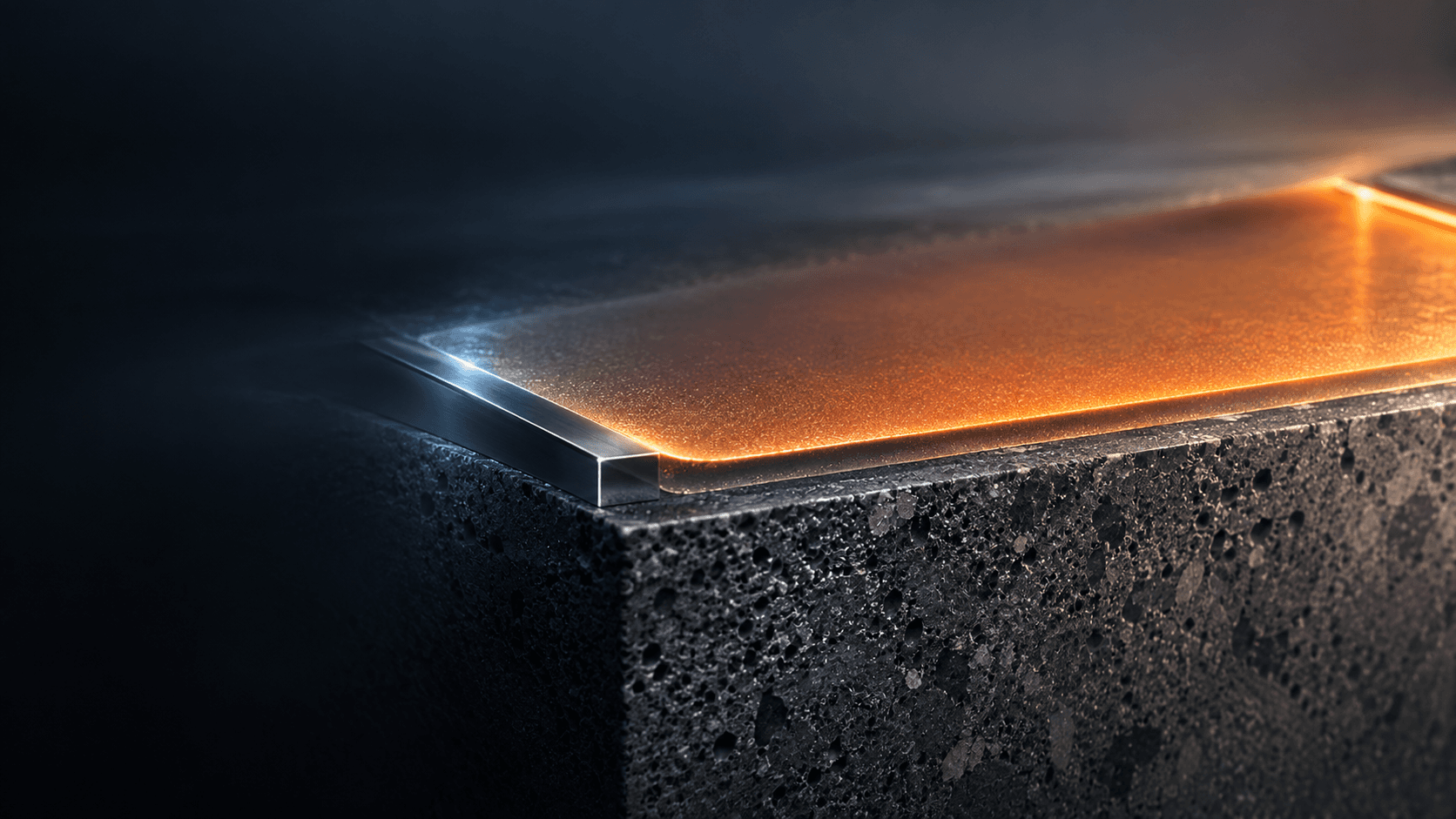

PURE PARTS TECHNOLOGY PLATFORM
An electric functional layer for integrated heating systems.
Heating becomes a surface function — integrated into defined panels, products and design objects instead of added as a separate heater.
Conventional heating technology is often added to a space or product as separate hardware. PURE LIQUID HEAT explores another route: integrating the heating function directly into defined surfaces and components.
Heating functionality can be integrated into panels, furniture and objects instead of added as a separate visible heater.
Heat is generated across a functional surface rather than only at a point-shaped heating element.
Thin functional layers allow heating concepts to follow product and design geometry more closely.
Defined heating zones can be controlled individually according to the application.
PURE LIQUID HEAT uses a conductive functional coating. Electrical current flows through the defined conductive layer and electrical resistance converts the supplied energy into heat.
Copper conductors, coating resistance, geometry and system control determine the thermal behaviour of the finished heating module.
The result is a thin, electrically activated heating surface that can be integrated into defined products and components.
The functional coating is only one part of the complete system.
GFB / GFK / Vermiculite
Direct application to the defined substrate. No primer layer.
Electrical contacting, temperature sensing, thermal protection and system control.
Only where required by moisture, outdoor exposure, cleaning or mechanical load.
Internal development images show early Liquid Heat modules, panel formats and design integrations. They document physical development work but do not represent released series products or independent certification.
INTERNAL DEVELOPMENT / PROTOTYPE IMAGES
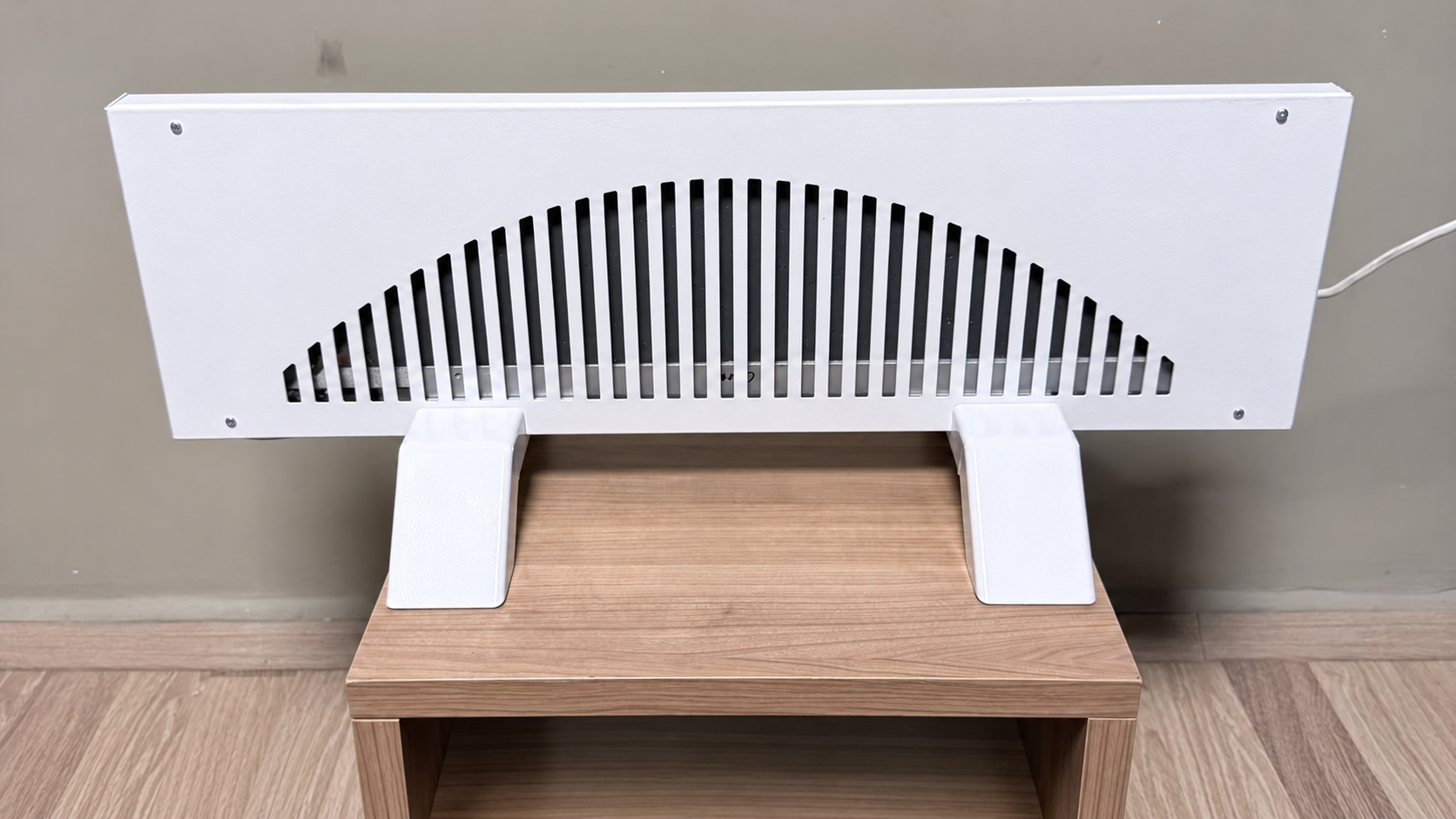 INTERNAL PROTOTYPE
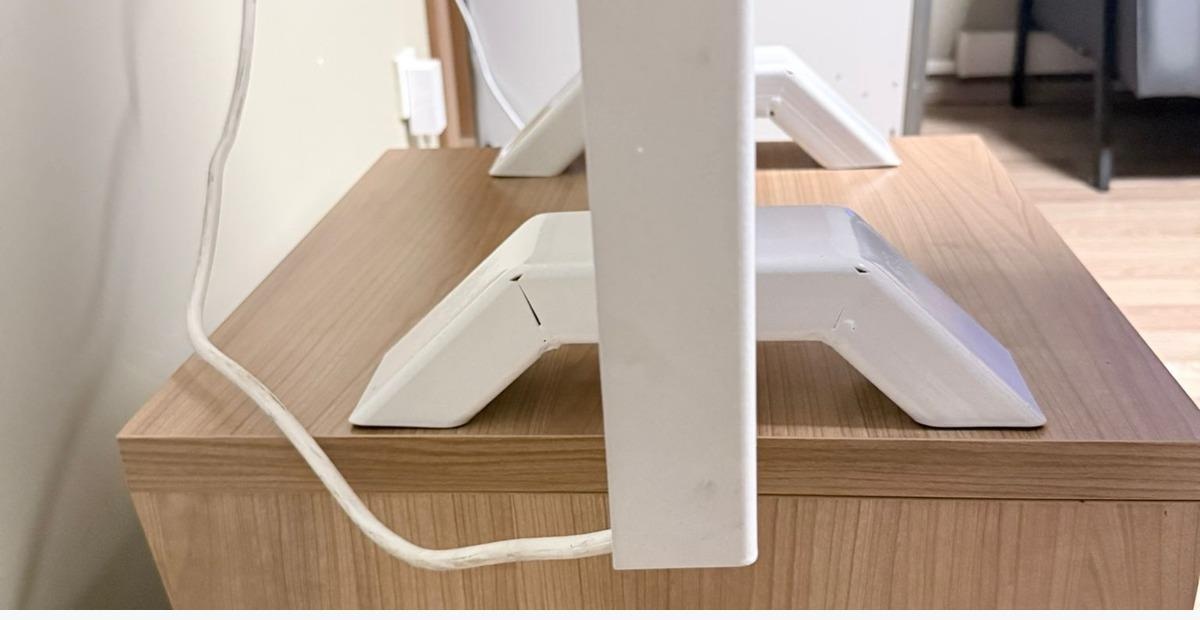 INTERNAL PROTOTYPE
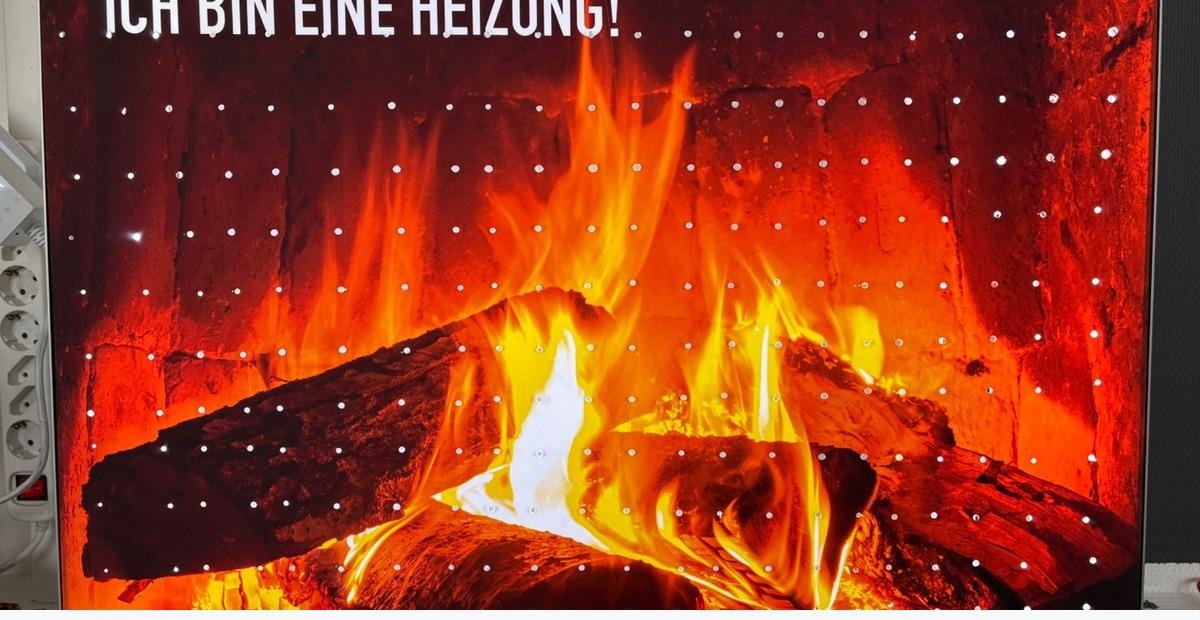 INTERNAL PROTOTYPE
The thin functional heating layer can react quickly compared with systems that first have to heat large masses.
Heating functionality can disappear into panels, furniture and technical products.
The active layer enables surface-based heat generation across a defined module.
Temperature sensors, control electronics and separate zones can adapt heat delivery to the application.
The value is not a new law of physics. It is a different way of designing where and how electrical heat is delivered.
Integrated heating concepts for terraces, hotels, gastronomy and premium outdoor environments, placing warmth close to the user while reducing visible heating hardware.
INTERNAL PROTOTYPEWall, panel and furniture concepts can combine design surfaces with integrated electrical heat.
INTERNAL PROTOTYPEPURE LIQUID HEAT can be developed as a functional heating module within a defined OEM product architecture.
Every OEM application requires its own defined substrate, contacting, electrical architecture, thermal limits and validation programme.
Surface heating can also be developed for anti-condensation, frost protection and controlled temperature maintenance in technical components.
Instead of heating an entire outdoor area, heating functionality can be integrated close to the user — for hospitality, public spaces and premium winter environments.
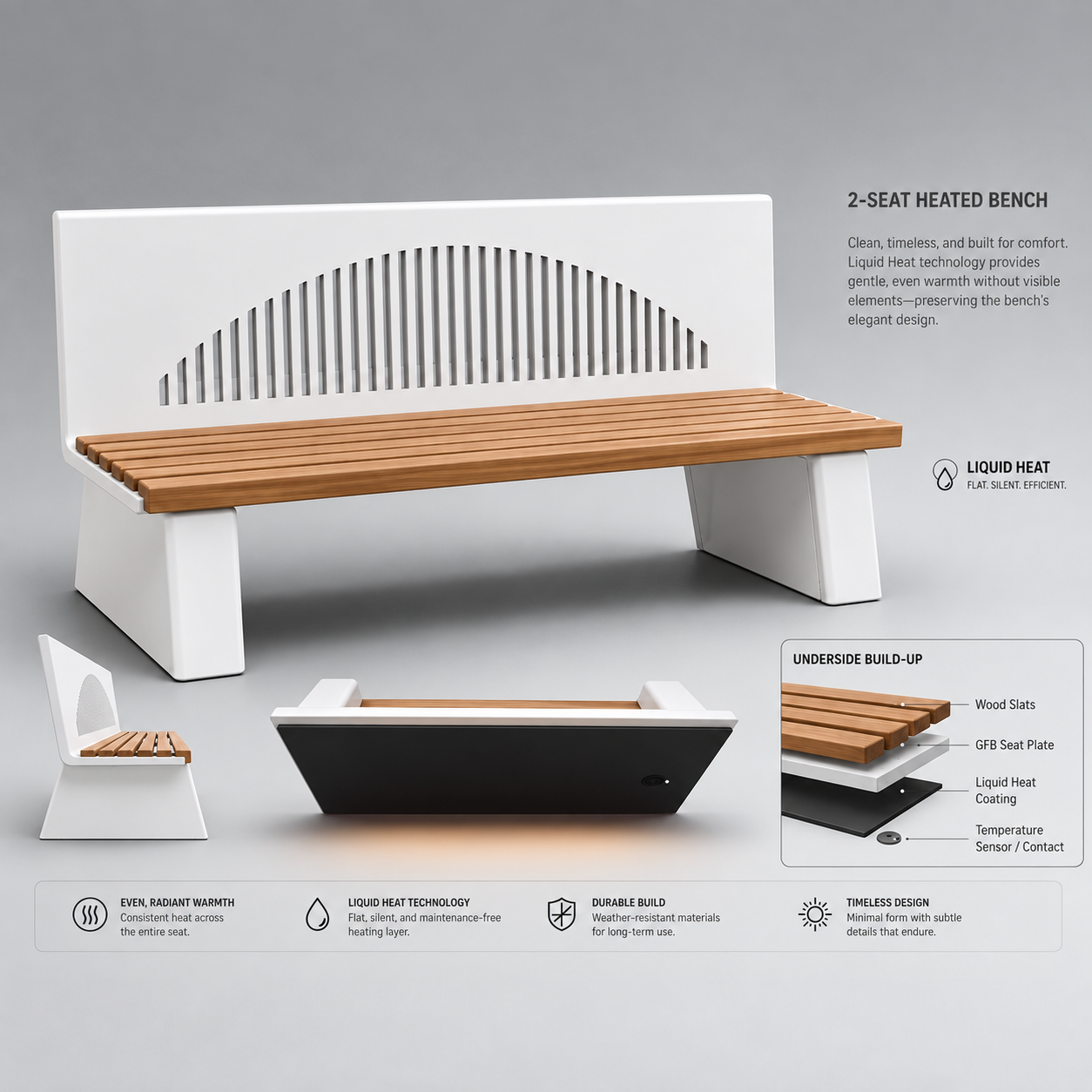 DEVELOPMENT CONCEPT
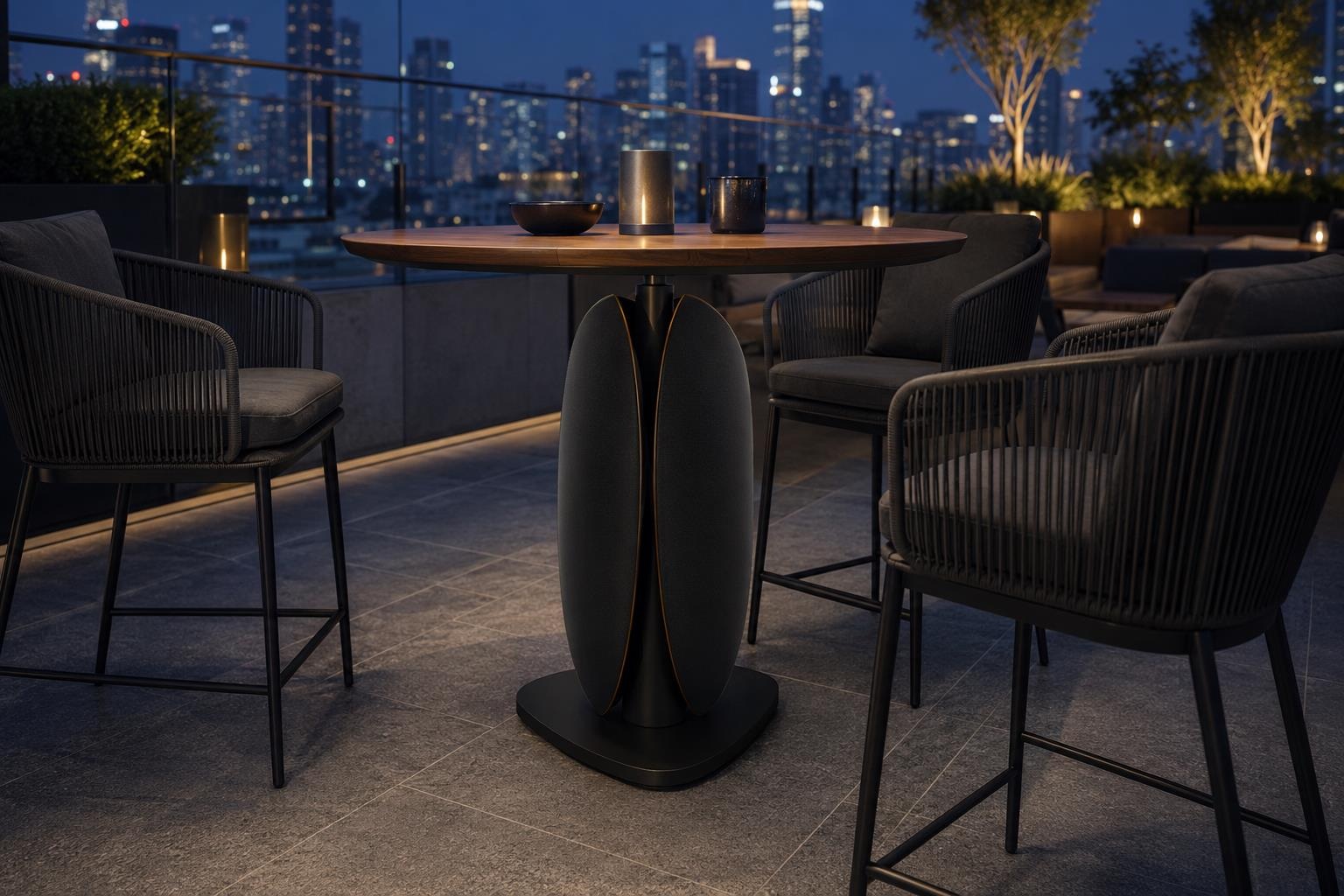
A current development concept explores how PURE LIQUID HEAT can be integrated into the base of hospitality and terrace tables, moving the heat source close to the user while preserving a clean furniture design.
Concept design — geometry, output, surface temperature, safety and certification remain subject to engineering and testing.
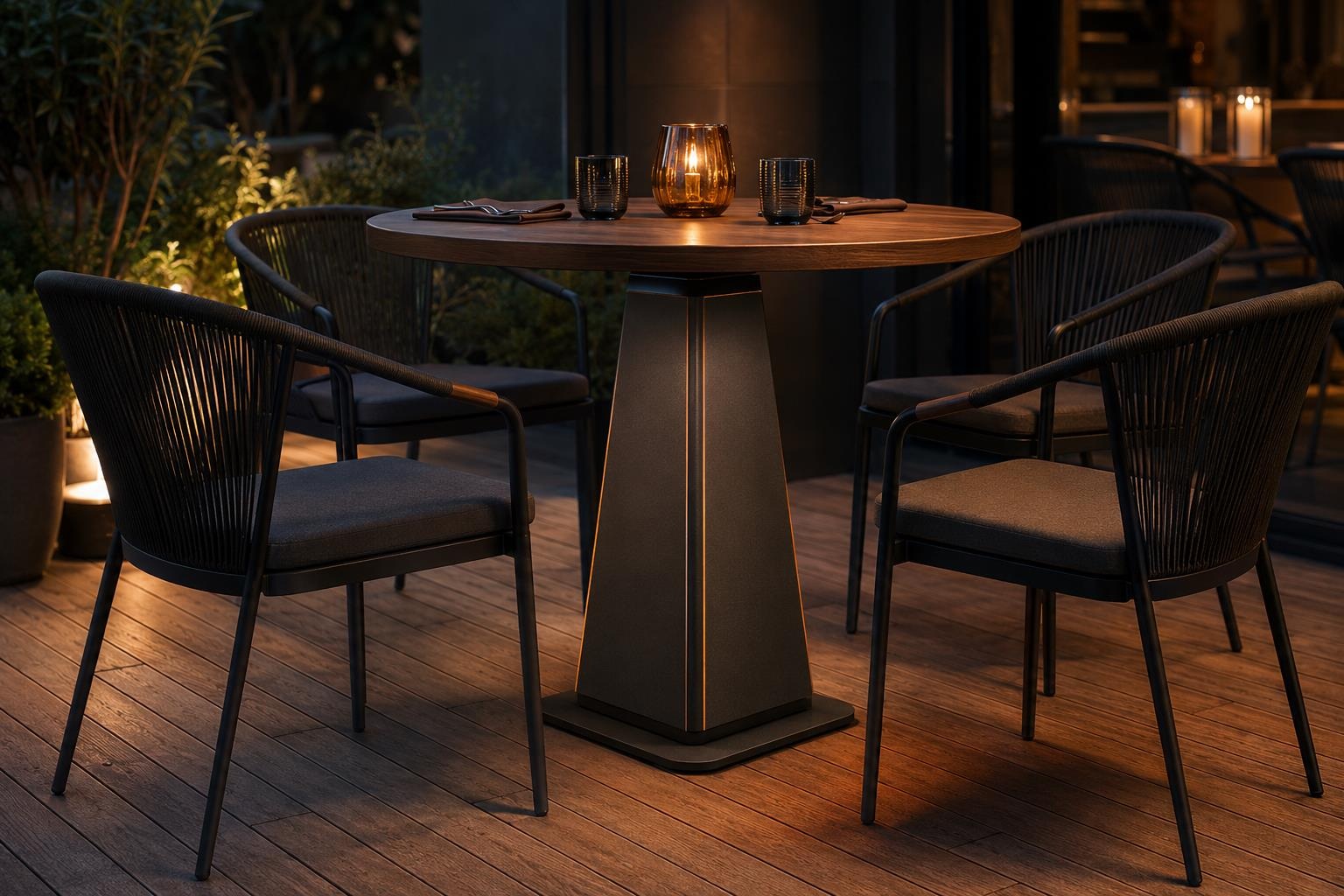 DEVELOPMENT CONCEPT
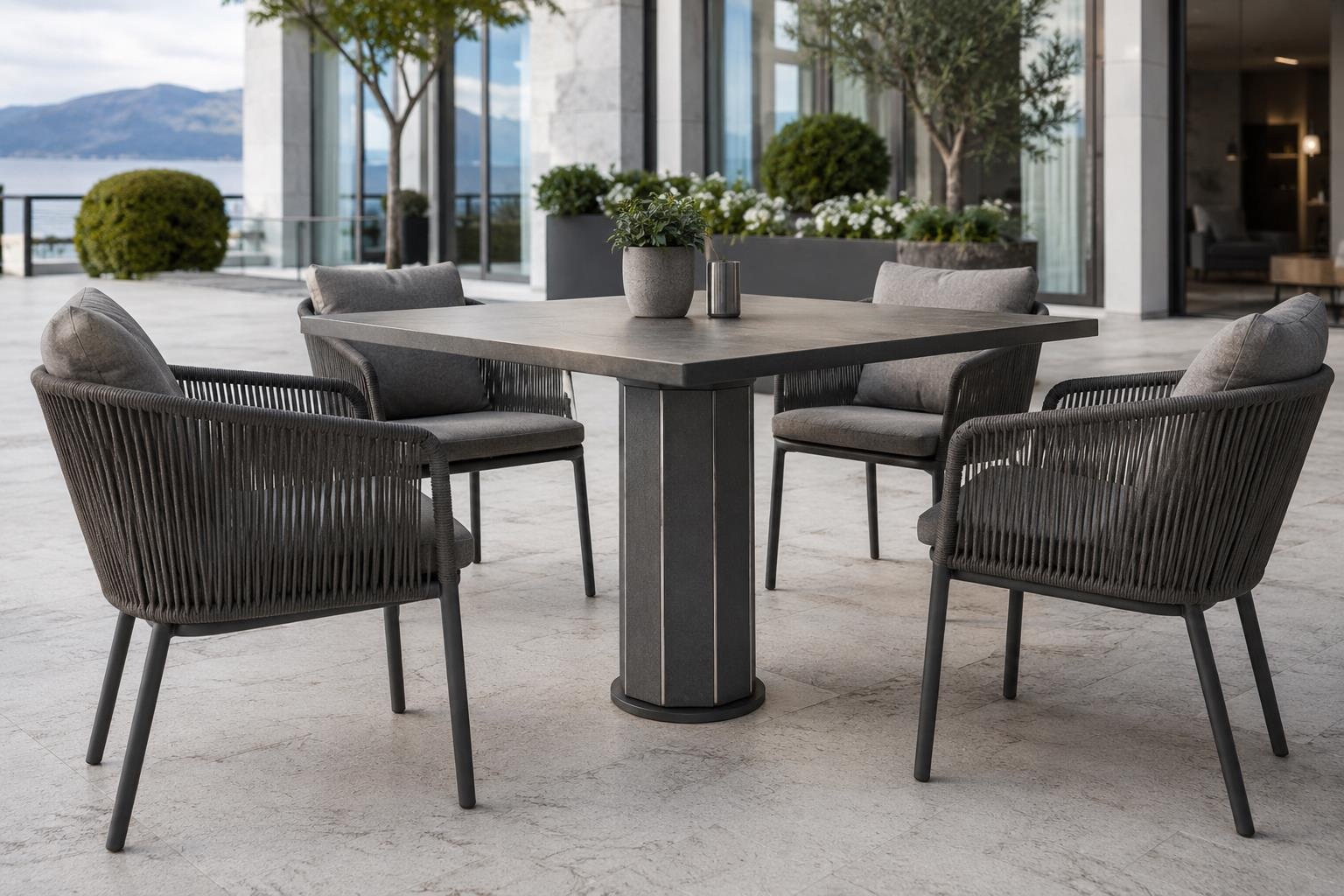 DEVELOPMENT CONCEPT
 DEVELOPMENT CONCEPT
PURE LIQUID HEAT is being integrated into a complete outdoor heating device. The development architecture is defined; external type testing, conformity assessment and series release are still pending.
D · development status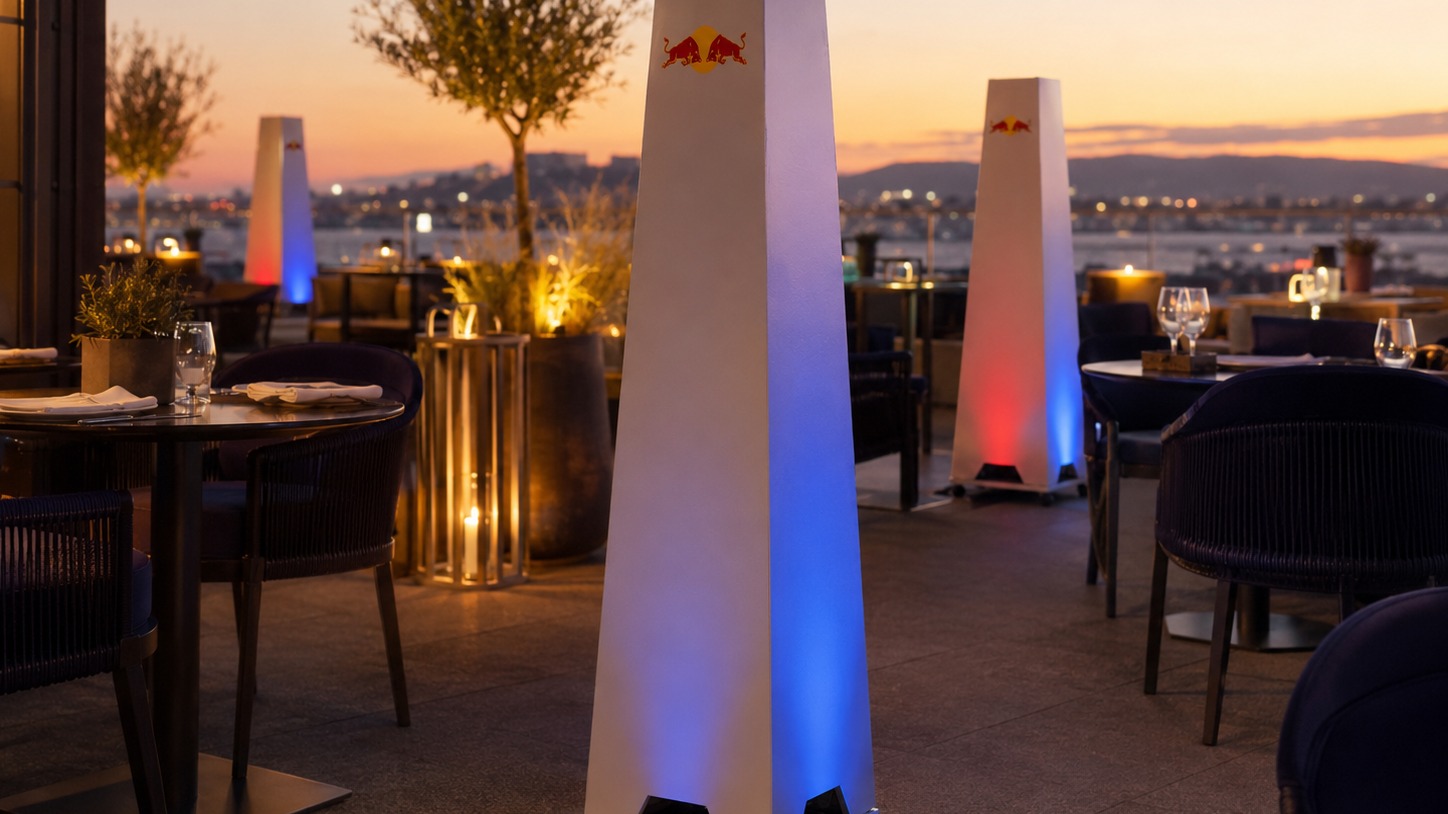 DEVELOPMENT CONCEPT
Development and planning values. Not released series specifications.
Intended for these application areas and subject to the planned safety and conformity assessment.
Target for final device qualification: at least IP44, subject to testing of the complete series-identical product.
Define intended outdoor use, output and variants.
Freeze power supplies, heating surfaces, control, sensors, safety, LED, enclosure and mechanics.
Bindingly define applicable EU legislation, standards and test methods with a suitable accredited testing institute.
Electrical, thermal, mechanical, IP, EMC, EMF, RoHS and endurance testing on the series-identical device.
EU Declaration of Conformity, CE marking, series end-of-line testing, traceability and change management.
The steps shown describe the intended validation pathway. They do not constitute certification that has already been completed.
In the complete end device, PURE LIQUID HEAT is treated as a functionally and safety-relevant component. Layer thickness, resistance range, contacting geometry, conductor spacing, substrate, drying and repair limits must be defined and controlled for the series configuration.
Changes to formulation, application, contacting or safety-critical components are subject to documented change management.
External type testing and CE conformity assessment with a German accredited testing institute are planned. CE conformity assessment, IP44 device qualification and third-party certification have not yet been completed.
Series release only after completion of the required test programme, closure of safety-relevant findings, completion of the technical file and signature of the EU Declaration of Conformity.
An internally documented GFB panel was used continuously as a heating element during a winter season in Portugal. According to the available internal observations, the approximately 90 °C surface temperature and electrical power draw remained stable during the observed operating period.
The observation provides useful practical evidence of stable operation in this specific configuration.
It is not yet an independent long-term certification or a transferable lifetime guarantee for every PURE LIQUID HEAT system.
Defined engineering questions are part of developing a reliable heating system.
Extended operating hours and thermal cycling.
Complete system testing including contacts, control and fault conditions.
Protective layers, electrical isolation and application-specific environmental testing.
Defined coating resistance, contacting, process control and quality assurance.
Voltage, current, power density, surface temperature and warm-up behaviour must be specified for each defined system configuration.
Electrical and regulatory assessment applies to the complete end system, not to the coating in isolation.
Depending on the final product and market, electrical safety, EMC, temperature limitation, environmental protection, fire behaviour and other requirements may need to be evaluated.
Develop and measure a defined Liquid Heat demonstrator under controlled operating conditions.
Integrate the functional heating layer into a product or component with a defined engineering and QA specification.
Work with PURE on electrical, thermal, environmental and long-term validation of a defined system.