MATERIAL AESTHETICS
Visible timber and natural materials should retain their design identity.

PURE FIRE PROTECT
Clear, water-based fire protection technology for defined timber, natural-material and selected specialist applications — developed as a controlled system comprising substrate, application, coating quantity, optional top protection and technical evidence.
Visible timber and natural materials should remain visible. Smoke development and burning droplets or particles matter alongside flame spread. The relevant fire class belongs to the tested build-up, not automatically to every application of the material.
Visible timber and natural materials should retain their design identity.
Fire performance is not assessed by flame spread alone.
Substrate, application quantity, top layer and use affect assessable performance.
Existing documented product basis — SOURCE VERIFICATION REQUIRED where original TDS/SDS assignment is not available in the repository.
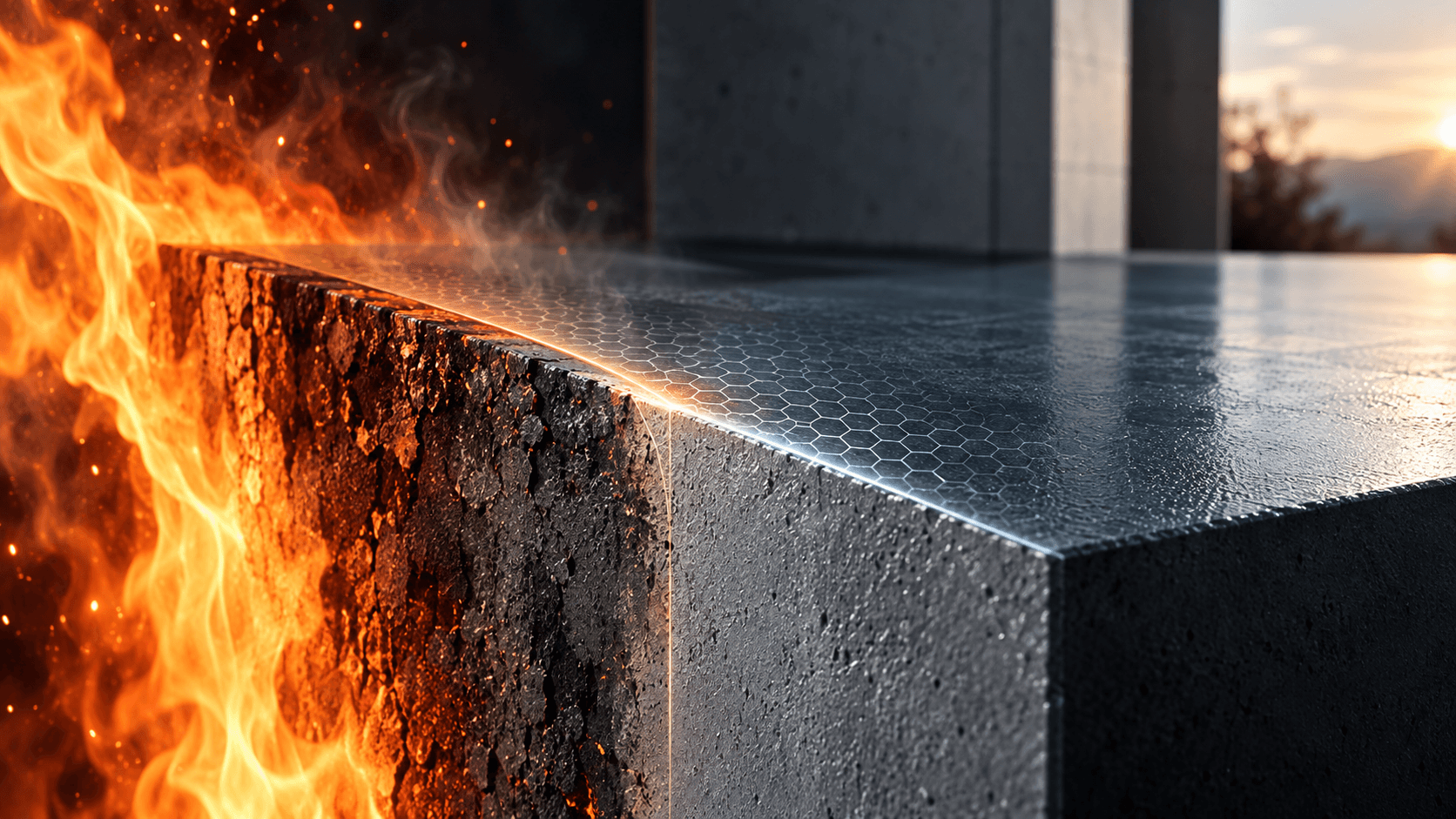
The treated surface should remain largely visible in normal conditions.
Heat and flame exposure activate the mechanism.
Available technical documentation describes formation of an insulating mineral foam layer.
Resulting fire performance must always be assessed for the real system build-up.
Defined timber / wood-based substrate or another project-specific substrate requiring assessment.
Substrate condition, moisture, compatibility and any defined primer.
On timber, available basis indicates typically 2 × 100–125 g/m².
Only where defined for the specific system, for example a clear-coat component.
Quantity, climate, drying, batch, photographs and acceptance.
CLT, timber façades and interior fit-out.
Thatch, straw and historic / natural building materials.
Schools, hotels, childcare and assembly spaces — only with the relevant system evidence.
Panels, edges, corners and process areas.
Development route only.
Separate development route only.
The webcut shows three internal test sequences using cardboard, wood and straw. Direct flame exposure remains visible in all three sequences, and the final sequence ends while exposure is still in progress.
The following values are presented as the available documented test basis. Original reports and exact product/system assignment require verification before a higher evidence claim is made.
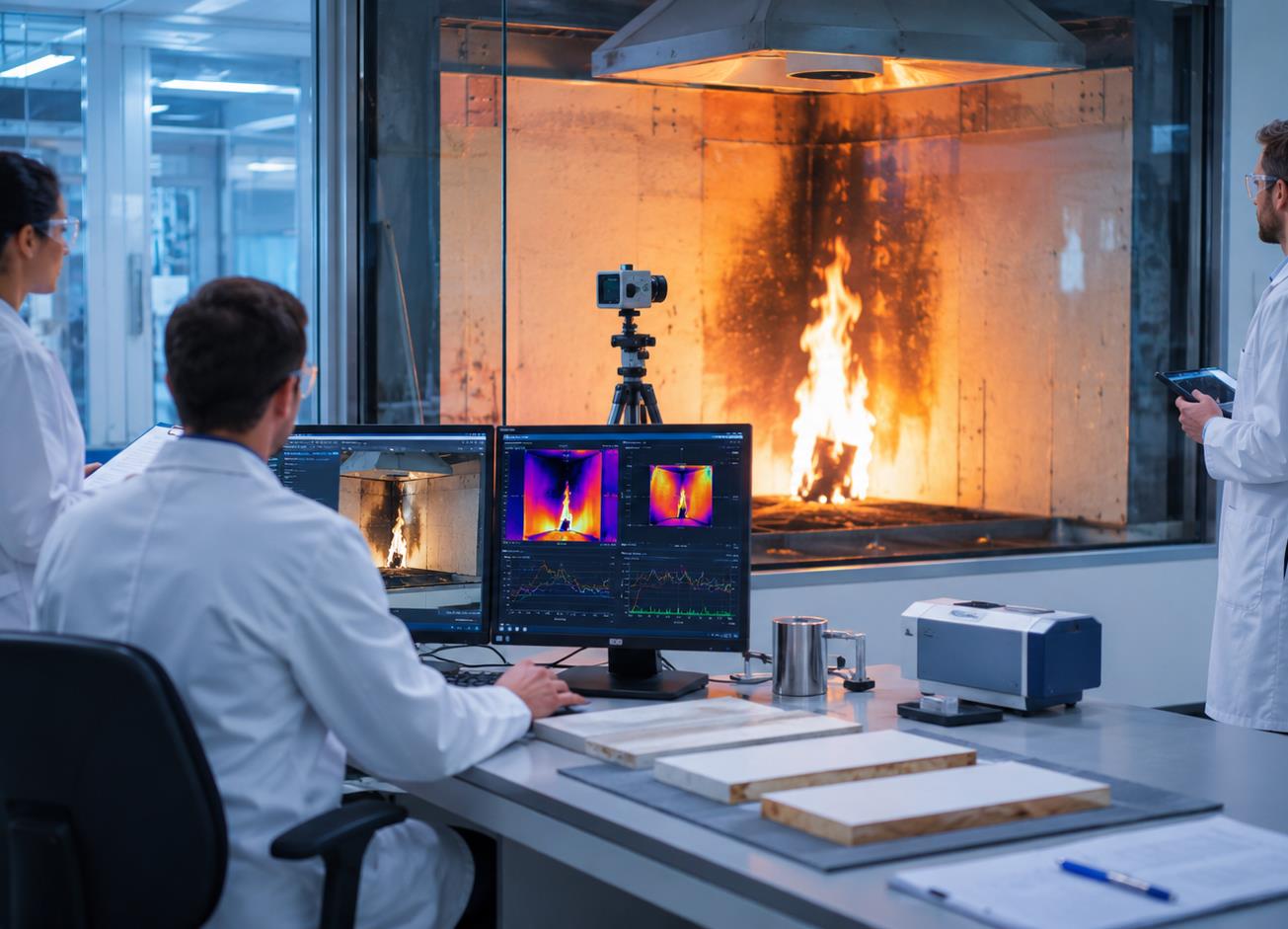
These values apply exclusively to the documented test build-up. They do not replace formal classification or retesting for different substrates, layer thicknesses, top layers, edges, corners, combinations or applications.
Favourable smoke classification in the documented configuration.
No burning droplets / particles in the associated dataset.
In the available SBI dataset.
Moisture, compatibility and any primer.
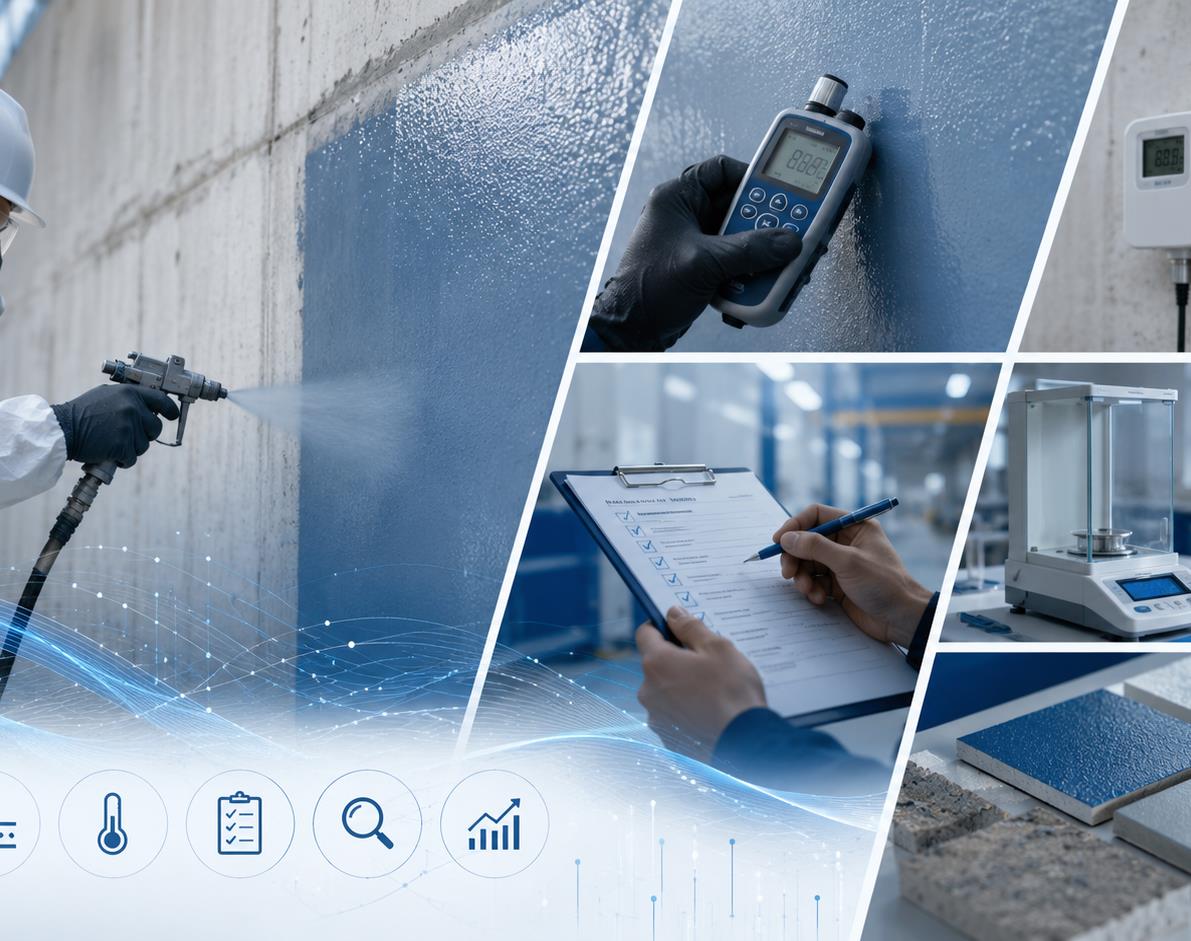
Use documented processing conditions where available.
Spraying, rolling or brushing; on timber typically 2 × 100–125 g/m².
Use only existing TDS values where verified.
Batch, material quantity, climate, photographs and acceptance.
SOURCE VERIFICATION REQUIRED: original TDS/SDS and processing documents are not fully available in the repository.
Fire class, smoke, VOC and use.
Additional façade, large-fire and national requirements.
External fire, weathering and ageing.
Surface, edge and corner.
OEM-specific development and test route.
Independent extinguishing-agent, equipment, toxicity and corrosion route.
Fire protection as a functional value layer.
We consider substrate, use, layer build-up and evidence objective together to define the appropriate test and system route.