UV & WEATHERING
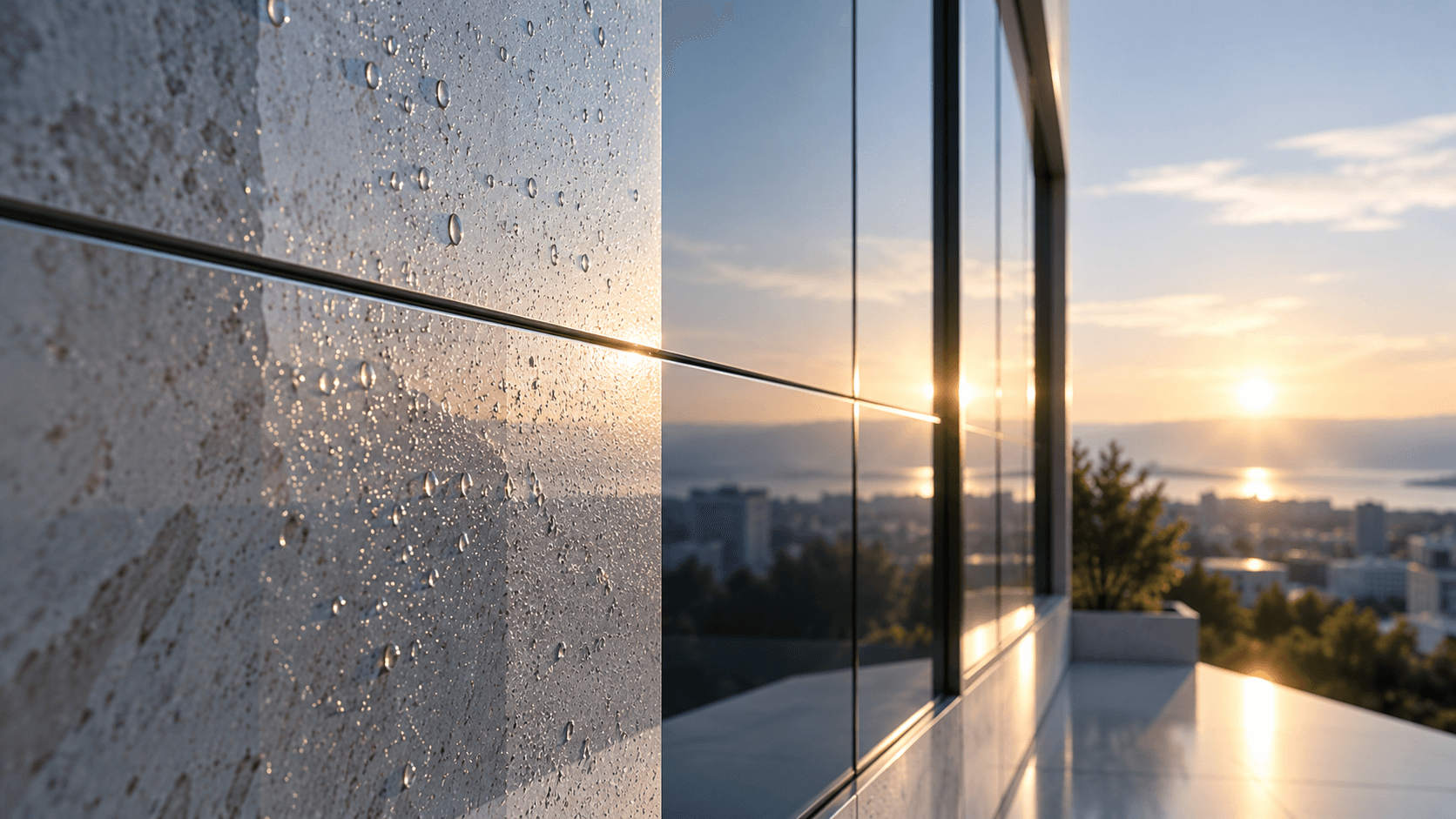
UV, moisture and temperature changes affect surfaces over time.

PURE SURFACE PROTECT
Ultra-thin, transparent functional coating for façades, metal, glass and high-value surfaces — developed to support easier cleaning, reduced maintenance and longer-lasting surface appearance.
UV, dirt, moisture, abrasion, graffiti and chemical exposure can affect the appearance, cleanability and retained value of surfaces. Replacement or recoating is not automatically the most economical answer for every situation.
UV, moisture and temperature changes affect surfaces over time.
Dirt and deposits influence appearance and cleaning effort.
Abrasion and chemicals can stress treated and untreated surfaces.
Maintenance, refurbishment and downtime shape the economic context.
Not every surface needs replacement. Sometimes the existing surface needs a new function.
Substrate, surface condition and appearance target are assessed.
A very thin sol-gel / organosilane-based hybrid matrix forms the functional protective layer.
Reduced porosity is intended to reduce the penetration of moisture, pigments and deposits.
Contamination remains more at the surface and can therefore be easier to remove.
Aluminium, glass, metal panels and coated façade surfaces.
Stations, airports, bridges, railings, doors and public surfaces.
Machines, equipment, stainless steel and painted components.
Optical preservation of high-value surfaces with as little visible change as possible.
The footage shows cleaning and treatment work on a real facade surface. The soiled substrate, manual surface work and progress across the building facade are visible.
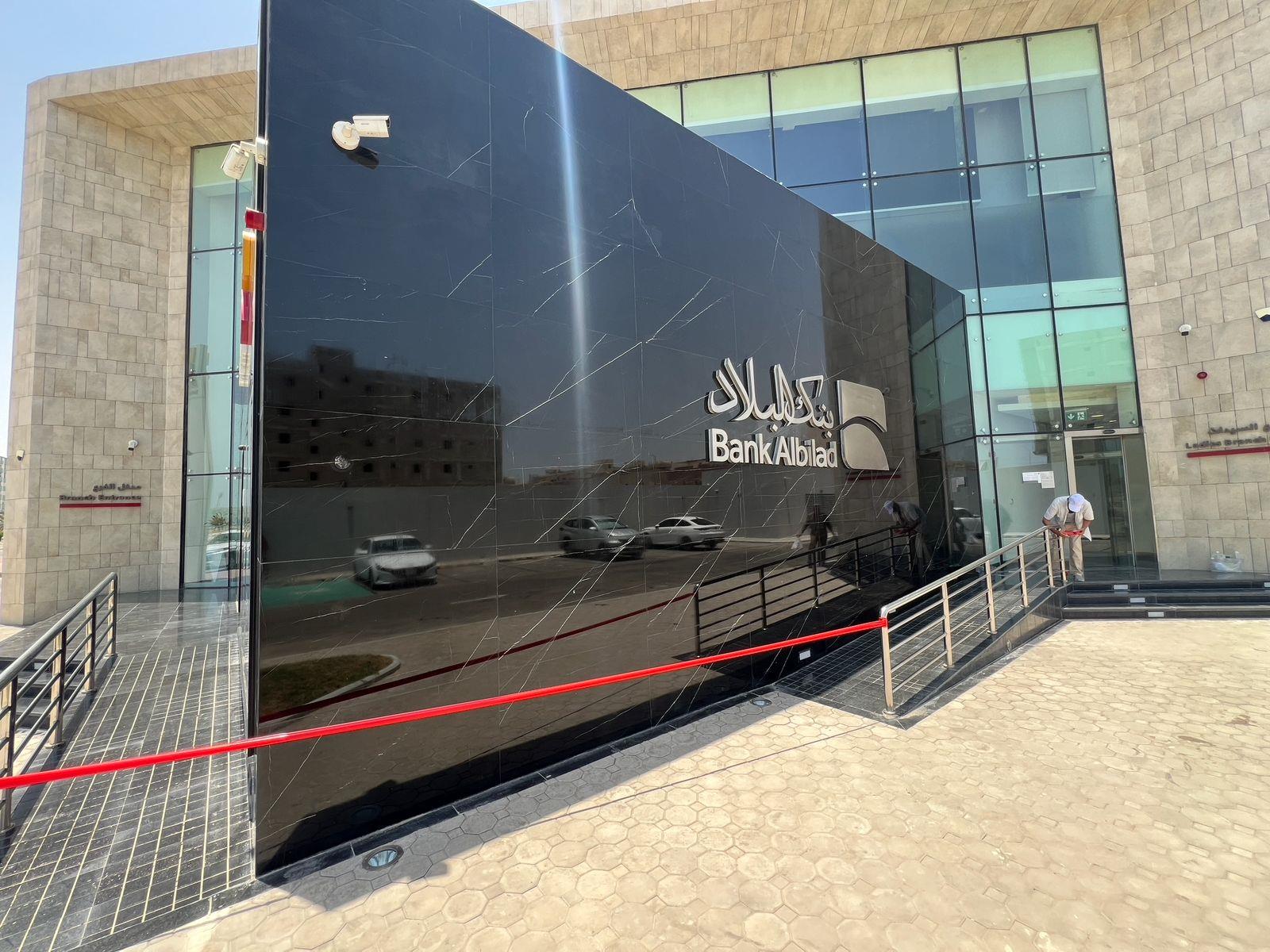
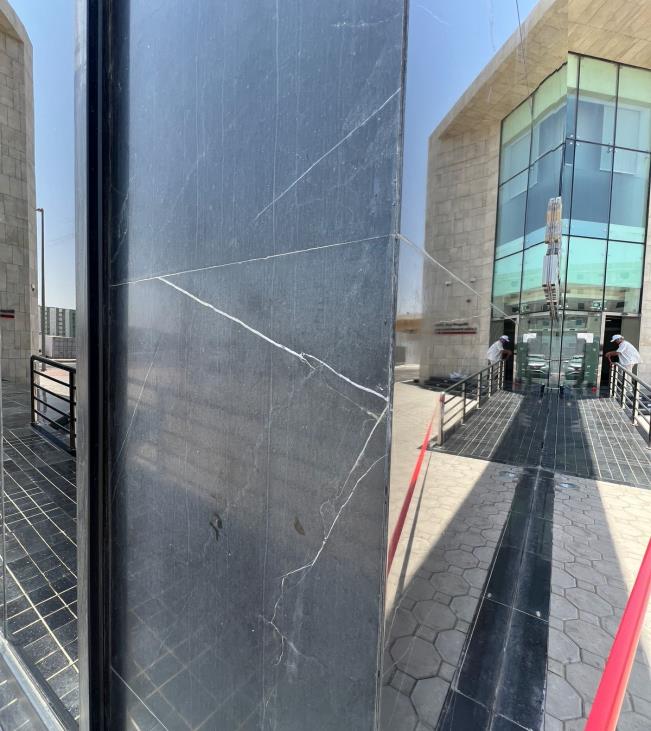
Real-world application reference on the marble façade of a bank building.
Observed visual reference effect. This does not establish guaranteed lifetime, universal marble performance or measurable energy or cost savings.
The figures come from the available project documentation. Adhesion, appearance, cleaning behaviour and durability must be assessed for each new object. LANUV is a project reference, not a product approval.
documented product / project basis
documented product / project basis, application-dependent
technical and practical indications; object-specific test area required
practical indications available; long-term data to be added
application-specific indications; cleaning test for each surface required
technically plausible development / application logic; salt / climate test required
Define the original substrate, cleaning condition and appearance target.
Check wetting, gloss, colour, transparency and tactile quality.
Depending on application: easy-clean, UV, abrasion, chemical, corrosion and graffiti tests.
Document method, consumption, drying and climate.
Document photos, cleaning test, consumption and result.
The technology is only as reliable as the documented substrate and application process.
Project economics can be influenced by cleaning cycles, cleaning chemistry, recoating, refurbishment intervals, downtime, retained appearance and the service life of the treated surface.
Context figures remain application- and project-dependent: 70–90 m²/L · 5,000 m² LANUV reference scale · 4 days / 4 people. No automatic cost saving is calculated from these figures.
Depending on the application, building requirements, VOC / indoor emissions, adhesion, UV / weathering, cleaning chemicals and substrate compatibility may need to be assessed. No general regulatory approval is implied.
We assess substrate, application, appearance target and required surface function before defining an appropriate test area.